
BARC – August 2024
With sunny days coming through early in Victoria, we can already see the blossom (and feel the hay fever!). In recognition of the changing seasons, we want to draw your attention to the information on snake season on page 66 of your manual.
In next month’s newsletter, we will go into more detail about snakes and safety in spring and summer. For now, keep an eye out for snakes around long grass, water edges, or in their favourite spot for sunning themselves – warm pavement.
Solar Organic Dog Waste Cones
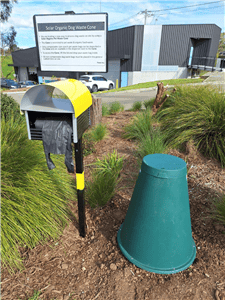
Guide Dogs Victoria’s Sustainability Committee has rolled out a new initiative, installing new dog poo bins to reduce waste. They are known as solar organic dog waste cones.
These cones will break down the dog waste within the cone and help reduce the need for collections and processing of waste. Only corn starch bags can be used with these bins to ensure the composting will work.
There are two locations for the new cones. One is located at the bottom of ‘Picnic Hill’ (the grass hill outside Betty Amsden Education Centre), and the other is near the top of the stairs between the dog van parking spaces and the Amsden Assessment Kennel block (old vet clinic).
They are marked with a yellow and black pole with instructional signage and have a cornstarch bag dispenser attached. A photo is attached showing the new waste cone, the yellow and black pole, and attached cornstarch bag dispenser.
We will still have some small green waste bins on-campus for those who are transitioning towards using cornstarch bags. When on campus, we encourage you to use the bags provided. Please feel free to take a bag or two on arrival to use and have on-hand when caring for pups during your Campus visit.
Expert Tips: Car Travel
When teaching pups how to travel in the footwell of a car, please refer to page 87 of the Puppy Raising Manual. The reason we teach our pups to sit in the car footwell is so adult working Guide Dogs are comfortable and well-practiced for future taxi or rideshare travel with their Handlers who have low vision or blindness. This is taught gradually over the first few weeks of the Puppy Raising period. After this stage, we tend not to have many issues with car travel or travel sickness, however, please speak to your Puppy Development Advisor (PDA) with any concerns.
A snapshot of our guidelines can be found on page 20 of the manual, which includes some information on car travel. Pups must not be left alone in a car at any time. This is for a few reasons, with safety being the first and most important. Cars can heat up extremely quickly which can be life-threatening. With warmer weather approaching, please take this as a warning of the dangers.
Other reasons include preventing damage to the vehicle (young pups like chewing and this can be expensive lesson to learn with car inertia), reducing the risk of a pup accidentally moving a vehicle by knocking brakes, and stopping pups from jumping out the driver’s side door when left open around busy roads. Please always ensure all car doors are shut when moving around, pups are known to jump about the car when they think they are being left behind.
Tethering in the footwell is a good method to prevent pups moving about the car. Use the seat adjustment handle under the passenger seat as a good anchor point.
What to do with a big pup and a small car
At times, large pups can outgrow small footwells. This can become uncomfortable for the passenger in the front and uncomfortable for the puppy. In these cases, it is best to speak to your PDA. After the discussion, the best option to use moving forward will be determined from the below:
- Boot area of a station wagon with a cargo barrier.
- Rear passenger footwell for pups already trained to sit in the front footwell (please note a tether point may be needed).
- Car harness for rear seat (GDV will guide on which harness to use).
Passenger knee airbags
Many newer vehicles have airbags in the front passenger seat, and this can be extremely dangerous for pups sitting in the footwell.
If your vehicle has knee airbags, please speak to your PDA about the best alternate travel arrangements for training purposes and taking into consideration safety.
Pet Dog Classification
As you may know, we’ve been collecting name suggestions for our pet dog classification over the last few months. Many thanks to those who responded to our request for name ideas via email following the last BARC newsletter, and thanks to the GDV staff across the whole organisation who put on their creative hats!
We are now taking these names to our stakeholders who have purchased pet dogs from GDV in the last year, as well as liaising with our Marketing Team to ensure that the final name selected is both reflective of the wonderful nature of our dogs, but also a suitable name to reflect our brand. It’s been a fun process to see the creative names come in, and we will keep you updated as things progress!
Inside Cute HQ
- Zammy x Banjo – P litter: Posie, Plato, Patrick, Peggy, Pip and Percy.
Heading home in September
- Britney x Igor – R litter
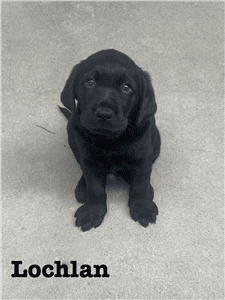
- Viva x Franklin – Q litter: Qirin and Quain (plus, Lochlan pictured below who is sponsored!)
Enrichment Groups and Handler Workshops
Enrichment groups are run in your regions weekly, fortnightly or monthly.
All new and experienced Puppy Raisers and Temporary Carers should speak to their Puppy Development Advisor to confirm if the pup in their care is ready to attend an enrichment group. Suitability is guided by your PDA as to each individual pup’s development. Pups must be at least five months or older to attend.
Handler Workshops
The Ivanhoe/Alphington sessions will cease from the end of August, so we can streamline some of the activities and create more connected communities around our Puppy Raisers and Temporary Carers by bringing these two volunteer groups closer together.
Temp Carer and Handler training will now be completed by attending the local enrichment groups where the Puppy Raising Advisors and group leaders/assistants provide an engaging environment for our dog Handlers to learn and connect. You can select a group that is most suitable for where you live, days you are free, or where your friends attend.