
BARC – April 2024
Welcome to the April BARC newsletter, we have changed our layout slightly. We hope you enjoy the new structure!
Majority of our reoccurring information has now been added to the updated manual. If you have not received the latest edition of the manual, you can find it on the Facebook page under files. Alternatively, you can ask your Advisor to send you a copy. Note, you can request electronic or paper copies.
Current news
Wild mushrooms and pups
Don’t forget to check your yard for mushrooms each year, especially during spring and autumn as wild mushrooms can be toxic to dogs. Mushrooms seem to pop up overnight, so if you can’t check your yard, please toilet the pup on lead until you can and upervise the pup while in the yard during mushroom season. Some mushrooms are hard to find, popping up in leafy areas, in the mulched garden beds, and under trees.
Signs of mushroom toxicity in dogs:
- Wobbling
- Vomiting
- Salivating
- Sleep-like coma
- Seizures
If you know the pup in your care has eaten mushrooms from the garden or park, please contact:
- During business hours: your advisors
- VetChat: 03 4427 9874 if after hours or if your Advisor is not available
Expert Tips
We have started posting weekly videos of some training tips for pups in our Facebook group, these will be general in nature and can apply to any pup. For specific training guidance for behaviours that the pup in your care needs improvement in, please continue to follow instructions given by your Puppy Development Advisor.
Barking out of boredom when out and about
If you think the pup in your care is bored and is wanting to move on and is therefore letting out an impatient bark, make pup wait until they are quiet then reward them by moving on when they stop barking.
Pups can incidentally learn to bark when out in certain situations. This can happen when you have previously used food to interrupt pup’s behaviour, or if you have moved on from being stationary on your walk when pup barks, rather than when you were ready and entirely your decision. If you think this may have happened, try using something else to interrupt such as vocal redirections or getting up and walking just before you think the pup may bark. You can then reward pup with food once quiet (“yes” – treat).
You may also provide toys for entertainment for a young pup, for example, something to chew which will encourage quiet behaviour whilst they wait for your readiness to move on.
Tip:
Be careful not to reward pup too quickly after they cease barking. Aim to put a little bit of ‘space’ when pup stops barking and when they are rewarded. Rewarding pup immediately after they have stopped barking can lead to pup associating the reward with the barking instead of being quiet. Gradually, the pup will maintain being quiet for longer which you can reward intermittently. Rewards include: verbal praise, pats and kibble treats.
Remember:
As with any behaviour – pups – like humans – do what they perceive works best for them. If a behaviour is persisting, it is because there is something that is reinforcing that behaviour. At times, figuring out what this is can be very difficult. If the pup in your care is barking, ensure you reach out to your Advisor to gain guidance and advice.
Inside Cute HQ
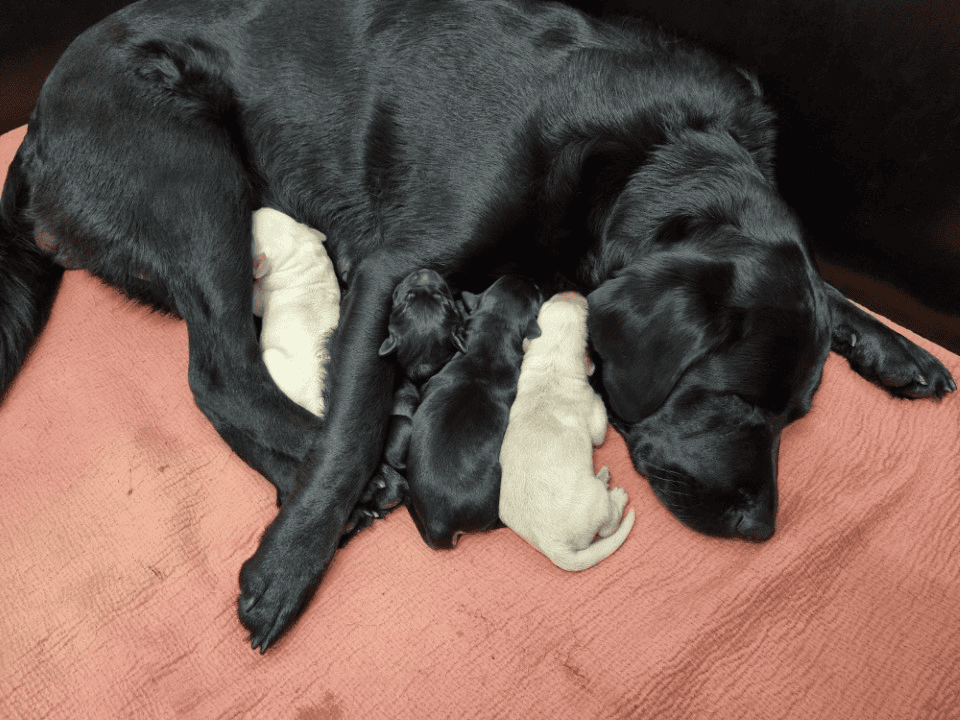
Elka x Forest babies were born 2.4.24
This is Elka’s first litter. She has taken to her mothering role well.
Heading home this month:
Raina x Viking: Glinda, Gertie, Ginny, Gandalf, Gabriella, Gino, Gwen, Giselle, Grayson, Genevieve, Gil
Samira x Peter: Huxley
Heddie x Banjo: Iris, Ida, Indella, Icarus, Immanuel, Iker
For more information on the BARC Facebook Group, Enrichment Groups and Handler Workshops, please visit our Puppy Raising PAWtal with the password pawtal-24.
Thanks for all your support!
The Guide Dog Services Team at
Guide Dogs Victoria