
BARC – July 2024
Welcome to the July 2024 BARC newsletter.
Current news
Our Puppy Administration Coordinator, Erin Simpson has moved onto her next chapter as of last week. Erin is returning to full-time study to complete her Bachelor of Education of Early Childhood and Primary. We will certainly miss her smiling face and warm personality around GDV, but can’t wait to see what her new endeavour brings!
For anything related to Puppy Raising, please continue to direct enquiries to the puppyraising@guidedogsvictoria.com.au inbox which is regularly monitored.
Our Volunteer Manager, Namrata Mundkur is also moving on from the organisation, with her final day being 26 July. Namrata has been instrumental in improving GDV’s volunteer program and forging an innovative and purpose-led path for our 500+ volunteers. Her expertise and passion have enabled positive change and growth across all areas of the organisation. We wish Namrata all the very best for the future.
For anything related to Volunteering, please continue to direct any queries to volunteers@guidedogsvictoria.com.au.
The Puppy Development Team is here to make this change as smooth and simple as possible for our BARC community, so if you have any queries or questions, please don’t hesitate to reach out to your Puppy Advisor. Otherwise, it will be business as usual with our pups and Puppy Raisers and Temporary Carers
Expert tips
Zoonoses are diseases which can be transmissible from dogs to people.
Commonly known to people and dogs
- Fleas (protection for dogs via NexGard Spectra monthly)
- Intestinal worms (protection for dogs via NexGard Spectra monthly)
- Giardia – protection via washing hands and ensuring faeces is picked up regularly (good habit – “immediately” for GDV pups).
Hygiene measures to prevent zoonosis
- Thoroughly wash hands after handling the dog – use hot water and soap or disinfectant.
- Thoroughly wash dog food and water bowls in boiling water and detergent, separate to human dishes, suggest using the laundry sink.
- No kissing dogs – we know this one can be hard!
What is giardia?
Giardia is an intestinal protozoan that can cause diarrhoea in dogs. The ‘parasite-like’ organisms live in the intestinal lining and are intermittently shed into faeces in the form of very resistant cysts.
Dogs acquire the infection from ingesting water or food that has been contaminated with faecal material containing these cysts or by licking a contaminated dog’s bottom.
It is more common for puppies to be infected, as multiple dogs share the same environment and some degree of immunity builds up in adult dogs.
The clinical signs seen are watery diarrhoea with a strong odour and occasional mucous and blood (note: not all faeces that present in this way is giardia).
Diagnosis is by microscopic examination of faeces for giardia cysts or a PCR test in a laboratory.
What to do if a puppy is diagnosed with giardia
Treatment is very effective at eliminating the infection from the dog, but environmental decontamination must also be actioned to prevent recontamination.
Treatment of the pup or dog:
- Panacur or Metronidazole medication (supplied by GDV’s vet).
- Bathe the dog all over with a chlorhexidine shampoo after the treatment is completed to remove any cysts in the coat (speak to a GDV vet).
- Clean all bedding when soiled – hot water wash with some bleach added (many local laundromats have dog washing machines).
- Pick up faeces as soon as possible to avoid environmental contamination.
- Keep environments as dry as possible, as cysts survive longer in water.
- Decontamination of grass is not possible. If a pup or dog has diarrhoea, hose away any faeces that remain after picking it up and sunlight will sterilise the cysts in two to four weeks.
Can humans get giardia?
A transmission of giardia from dogs to people (zoonosis) is possible, but not very common as there tends to be some degree of species specificity in giardia. However, young children or people who are on chemotherapy or immunocompromised are advised to be more careful. Prevention is always better than the cure
Pet Dog Classification
In last month’s newsletter, we asked for ideas to rename our ‘reclassified’ dogs – the name we give to our lovely dogs who don’t go on to become Guide Dogs and are destined to be terrific pet dogs. We had some wonderful, creative suggestions! Watch this space while we work with our Marketing Team to finalise the new name, which we will bring to you in August or September 2024.
Puppy Raising PAWtal
We are excited to bring our Puppy Raisers an easy-to-use PAWtal, where we will house recurring information and important links which you can access at any time. Click here to check out the new PAWtal to stay up to date on all things puppies. Simply use the password pawtal-24 to access the PAWtal.
Inside Cute HQ
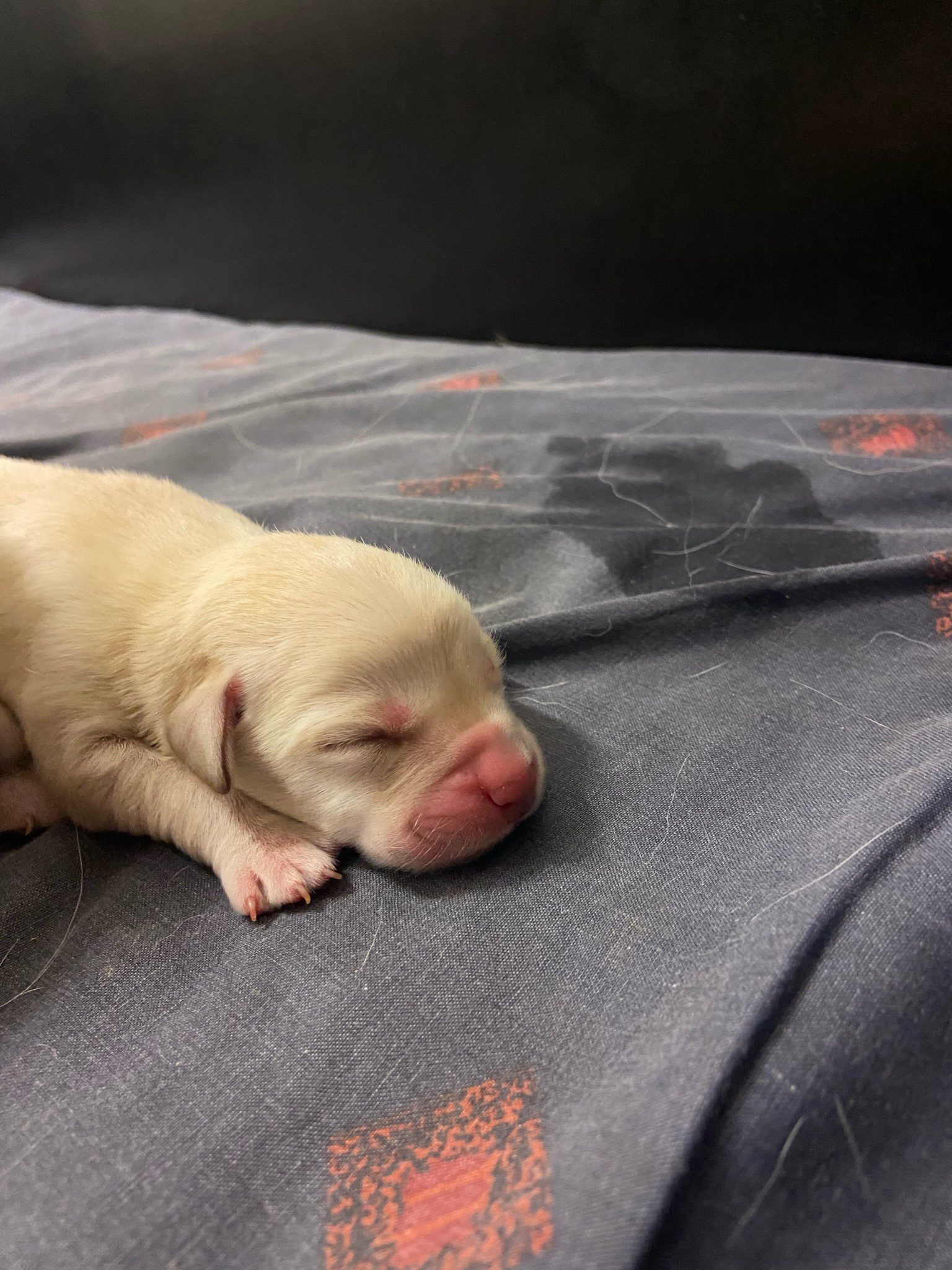
Viva x Franklin Pups born Sunday 14 July 2024.
N litter: Noah, Nessie, Nigel, Nora, Nelson, Nevada, Nams, Nettie, Neve, Nadia. Neo and Nyla will be puppy raised in South Australia and hopefully enter training there.
O litter: Odette, Olivia, Osaka, Omara, Olga, Ocean, Ebony (sponsored), Orlando.
For any other recurring information you may require about our Facebook group, Enrichment groups and Workshops and Handler workshops, please visit the Puppy Raising PAWtal using the password above.
Thanks for all your support!
The Guide Dog Services Team at
Guide Dogs Victoria